
Dragonborn
Dnd Dragonborn Race
Dragonborn
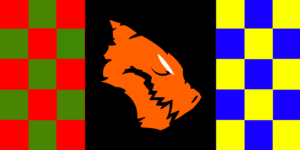
mysterious beings who often dwell in regions where dragons reign. They deliberately choose to live close to these mighty creatures, for they see dragons not only as rulers but also as gods. In these lands, they share their society with the kobolds, another draconic race that seems to share the same origin but holds a very different view of their divine beings.Dragonborn are proud and
Physically, Dragonborn resemble dragons: they have scales of many colors, a powerful build, claws, and an impressive draconic presence. Unlike true dragons, however, Dragonborn have no wings and cannot fly. The color of their scales varies, often reflecting the different types of dragons, from fiery reds to cool blues to gleaming golds. In many cases, the color of their scales also mirrors their inner strength or the kind of dragon to which they are most closely tied.
The Dragonborn see dragons as divine beings, and their entire society is built around honoring and obeying them. They believe it is their sacred duty to follow a dragon’s commands without question. For them, dragons are more than leaders: they are guides, saints, and living embodiments of the will of the gods. The Dragonborn religion revolves entirely around submission and devotion to dragons, and from a young age, every Dragonborn is taught to dedicate their life to serving these mighty beings.
Kobolds
In contrast to the Dragonborn, kobolds follow a different spiritual path. Though they often live in the same regions as dragons, their devotion is directed toward the wyverns, slimmer, fiercer creatures with only two legs and large wings, unlike dragons who have both four legs and wings. Kobolds view wyverns as divine beings, almost as father- or mother-figures, and follow them with childlike devotion. To the kobolds, wyverns embody raw power, speed, and instinct. Sometimes kobolds wear the skulls of other races as masks or headgear, a religious practice meant to bring them closer to their divine wyverns.
Kobolds are also draconic in nature, like Dragonborn, but are much smaller and less imposing. They lack wings as well, but their bodies are thinner, quicker, and far more agile. They are known for their mischievous and playful behavior, delighting in pranks, sometimes harmless, sometimes dangerous. They also have a strong tendency to collect objects, regardless of whether they actually own them.
Bond Between Dragonborn and Kobolds
Despite their differences, Dragonborn and kobolds share a special bond. They are not blood relatives, yet they often live side by side as brothers. The Dragonborn usually take on a serious and protective role, while the kobolds bring lightness and chaos into society. This balance allows the two races to complement one another: where the Dragonborn embody strength and devotion, the kobolds bring creativity, resourcefulness, and playfulness.
In societies where both races coexist, there is often a hierarchy in which the Dragonborn assume leadership, especially when a dragon is nearby. Kobolds usually accept this, so long as they are allowed to keep their own traditions. Though their status in society is lower, kobolds are not regarded as inferior, but rather as indispensable members of the draconic community.
Difference Between Dragonborn and Kobolds
It is important to understand the difference between the two beings these races worship. Dragons are majestic, intelligent creatures with four legs and two wings, powerful, magical, and often ancient and wise. Wyverns, on the other hand, have only two legs and large wings. They are wilder, more aggressive, and generally considered less intelligent than dragons, though kobolds still revere them as sacred. These fundamental differences also reflect the cultural contrasts between Dragonborn and kobolds.
Stats
Player handbook
- Ability Score Increase. Your Strength score increases by 2, and your Charisma score increases by 1.
- Age. Young dragonborn grow quickly. They walk hours after hatching, attain the size and development of a 10-year-old human child by the age of 3, and reach adulthood by 15. They live to be around 80.
- Alignment. Dragonborn tend towards extremes, making a conscious choice for one side or the other between Good and Evil (represented by Bahamut and Tiamat, respectively). More side with Bahamut than Tiamat (whose non-dragon followers are mostly kobolds), but villainous dragonborn can be quite terrible indeed. Some rare few choose to devote themselves to lesser dragon deities, such as Chronepsis (Neutral), and fewer still choose to worship Io, the Ninefold Dragon, who is all alignments at once.
- Size. Dragonborn are taller and heavier than humans, standing well over 6 feet tall and averaging almost 250 pounds. Your size is Medium.
- Speed. Your base walking speed is 30 feet.
- Draconic Ancestry. You are distantly related to a particular kind of dragon. Choose a type of dragon from the below list; this determines the damage and area of your breath weapon, and the type of resistance you gain.
Dragon Color | Damage Type | Breath Weapon |
Black | Acid | 5′ by 30′ line (DEX save) |
Blue | Lightning | 5′ by 30′ line (DEX save) |
Brass | Fire | 5′ by 30′ line (DEX save) |
Bronze | Lightning | 5′ by 30′ line (DEX save) |
Copper | Acid | 5′ by 30′ line (DEX save) |
Gold | Fire | 15′ cone (DEX save) |
Green | Poison | 15′ cone (CON save) |
Red | Fire | 15′ cone (DEX save) |
Silver | Cold | 15′ cone (CON save) |
White | Cold | 15′ cone (CON save) |
- Breath Weapon. You can use your action to exhale destructive energy. It deals damage in an area according to your ancestry. When you use your breath weapon, all creatures in the area must make a saving throw, the type of which is determined by your ancestry. The DC of this saving throw is 8 + your Constitution modifier + your proficiency bonus. A creature takes 2d6 damage on a failed save, and half as much damage on a successful one. The damage increase to 3d6 at 6th level, 4d6 at 11th, and 5d6 at 16th level. After using your breath weapon, you cannot use it again until you complete a short or long rest. HBInstead, you may use your breath weapon a number of times equal to your Constitution modifier. You regain expended uses on a short or long rest.
- Damage Resistance. You have resistance to the damage type associated with your ancestry.
- Languages: Your character can speak, read, and write. Common, Draconic and one other language that you want.
Chromatic
- Ability Score Increase. Increase one ability score by 2 and increase a different one by 1, or you increase three different scores by 1.
- Type. You are a Humanoid.
- Size. You are Medium.
- Speed. Your walking speed is 30 feet.
- Chromatic Ancestry. You trace your ancestry to a chromatic dragon, granting you a special magical affinity. Choose one type of dragon from the Chromatic Ancestry table. This determines the damage type for your other traits as shown in the table.
Chromatic Ancestry | |
Dragon | Damage Type |
Black | Acid |
Blue | Lightning |
Green | Poison |
Red | Fire |
White | Cold |
- Breath Weapon. When you take the Attack action on your turn, you can replace one of your attacks with an exhalation of magical energy in a 30-foot line that is 5 feet wide. Each creature in that area must make a Dexterity saving throw (DC = 8 + your Constitution modifier + your proficiency bonus). On a failed save, the creature takes 1d10 damage of the type associated with your Chromatic Ancestry. On a successful save, it takes half as much damage. This damage increases by 1d10 when you reach 5th level (2d10), 11th level (3d10), and 17th level (4d10). You can use your Breath Weapon a number of times equal to your proficiency bonus, and you regain all expended uses when you finish a long rest.
- Draconic Resistance. You have resistance to the damage type associated with your Chromatic Ancestry.
- Chromatic Warding. Starting at 5th level, as an action, you can channel your draconic energy to protect yourself. For 1 minute, you become immune to the damage type associated with your Chromatic Ancestry. Once you use this trait, you can’t do so again until you finish a long rest.
Metallic
- Ability Score Increase. Increase one ability score by 2 and increase a different one by 1, or you increase three different scores by 1.
- Type. You are a Humanoid.
- Size. You are Medium.
- Speed. Your walking speed is 30 feet.
- Metallic Ancestry. You trace your ancestry to a metallic dragon, granting you a special magical affinity. Choose one type of dragon from the Metallic Ancestry table. This determines the damage type for your other traits as shown in the table.
Metallic Ancestry | |
Dragon | Damage Type |
Brass | Fire |
Bronze | Lightning |
Copper | Acid |
Gold | Fire |
Silver | Cold |
- Breath Weapon. When you take the Attack action on your turn, you can replace one of your attacks with an exhalation of magical energy in a 15-foot cone. Each creature in that area must make a Dexterity saving throw (DC = 8 + your Constitution modifier + your proficiency bonus). On a failed save, the creature takes 1d10 damage of the type associated with your Metallic Ancestry. On a successful save, it takes half as much damage. This damage increases by 1d10 when you reach 5th level (2d10), 11th level (3d10), and 17th level (4d10).
- Draconic Resistance. You have resistance to the damage type associated with your Metallic Ancestry.
- Metallic Breath Weapon. At 5th level, you gain a second breath weapon. When you take the Attack action on your turn, you can replace one of your attacks with an exhalation in a 15-foot cone. The save DC for this breath is 8 + your Constitution modifier + your proficiency bonus. Whenever you use this trait, choose one:
- Enervating Breath. Each creature in the cone must succeed on a Constitution saving throw or become incapacitated until the start of your next turn.
- Repulsion Breath. Each creature in the cone must succeed on a Strength saving throw or be pushed 20 feet away from you and be knocked prone.
- Once you use your Metallic Breath Weapon, you can’t do so again until you finish a long rest.
Gem
- Ability Score Increase. Increase one ability score by 2 and increase a different one by 1, or you increase three different scores by 1.
- Type. You are a Humanoid.
- Size. You are Medium.
- Speed. Your walking speed is 30 feet.
- Gem Ancestry. You trace your ancestry to a Gem dragon, granting you a special magical affinity. Choose one type of dragon from the Gem Ancestry table. This determines the damage type for your other traits as shown in the table.
Gem Ancestry | |
Dragon | Damage Type |
Amethyst | Force |
Crystal | Radiant |
Emerald | Psychic |
Sapphire | Thunder |
Topaz | Necrotic |
- Breath Weapon. When you take the Attack action on your turn, you can replace one of your attacks with an exhalation of magical energy in a 15-foot cone. Each creature in that area must make a Dexterity saving throw (DC = 8 + your Constitution modifier + your proficiency bonus). On a failed save, the creature takes 1d10 damage of the type associated with your Gem Ancestry. On a successful save, it takes half as much damage. This damage increases by 1d10 when you reach 5th level (2d10), 11th level (3d10), and 17th level (4d10). You can use your Breath Weapon a number of times equal to your proficiency bonus, and you regain all expended uses when you finish a long rest.
- Draconic Resistance. You have resistance to the damage type associated with your Gem Ancestry.
- Psionic Mind. You can telepathically speak to any creature you can see within 30 feet of you. You don’t need to share a language with the creature, but the creature must be able to understand at least one language.
- Gem Flight. Starting at 5th level, you can use a bonus action to manifest spectral wings on your body. These wings last for 1 minute. For the duration, you gain a flying speed equal to your walking speed and can hover. Once you use this trait, you can’t do so again until you finish a long rest.